


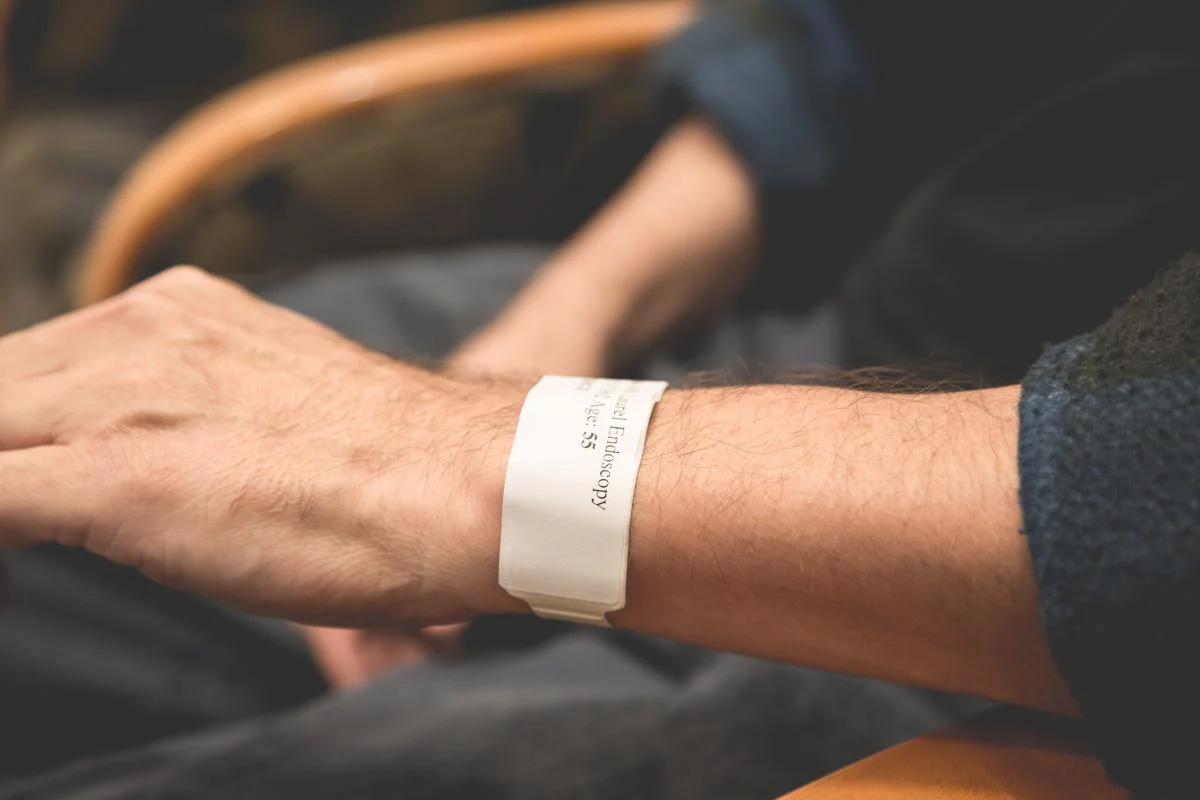
In behavioral health, you can’t rely on verbal ID or staff familiarity during agitation, sedation, or crisis. Secure, tamper‑resistant wristbands give you a consistent bedside identifier with name, DOB, and a unique barcode you match to the MAR before each dose. When you scan the band in BCMA, the EHR verifies the correct patient, time, and route, and alerts to allergies, duplicates, and missed doses. Next, you’ll see key rollout steps and requirements.
Why Behavioral Health Meds Need Stronger Patient ID
Although medication administration protocols aim to standardize safety, behavioral health settings often introduce added identity ambiguity, especially when patients cycle rapidly through units or receive care during acute agitation, sedation, or altered cognition. You can’t rely solely on verbal confirmation, room assignment, or staff familiarity; those controls degrade during rapid handoffs and high-stimulus crises. You need patient identification that remains reliable when documentation lags, names sound alike, or patients decline to engage. Stronger ID also supports medication adherence by reinforcing continuity: you confirm the right patient at every dose, track refusals accurately, and reduce rework from reconciliations.
How Secure Patient Wristbands Stop Wrong‑Patient Meds
When verbal checks and unit familiarity fail under agitation, sedation, or rapid handoffs, you need an identifier that stays with the patient and holds up to protocol. Secure patient wristbands reduce wrong‑patient meds by keeping identity verification consistent at the bedside and during transport. You can match the printed name, DOB, and unique ID to the MAR before you prepare or administer doses, even when patients can’t confirm details. Tamper‑evident closures and durable materials prevent removal, swapping, or illegible bands. That reliability supports patient safety, improves medication accuracy, and standardizes compliance across every shift.
How Wristbands Work With BCMA During Med Pass
Before you administer a dose, you use the wristband as the anchor for barcode medication administration (BCMA) at the bedside. You scan the wristband, confirm identity in the EHR, then scan the medication barcode to match the active order. The system prompts you to verify the dose, route, time, and required assessments, and automatically records the administration. Wristband technology supports real-time medication tracking across shifts, reducing manual documentation and improving handoffs. When policies require second checks or essential checks, BCMA routes you through those steps and timestamps completion for audit-ready compliance.
Highest‑Risk Med‑Pass Errors Wristbands Prevent
You use the secure wristband scan to confirm the correct patient before administering any dose, reducing wrong‑patient medication mix‑ups. You also verify documented allergies and contraindications at the point of care, so you don’t miss high‑risk warnings during the med pass. You check the active MAR against the wristband-linked profile to prevent duplicate dosing and catch omissions before you leave the bedside.
Wrong‑Patient Medication Mix‑Ups
Even in well‑run med‑pass workflows, wrong‑patient medication mix‑ups can occur if you rely on room numbers, familiar faces, or verbal confirmation alone. You reduce wrong patient incidents by making secure wristbands your primary identifier at the point of administration. Scan the band, match name and MRN to the MAR, and require a system “green” before you open the package or pour a dose. If the scan fails, you stop, resolve identity, and document the variance. This tight loop prevents medication errors during high‑volume passes, acuity changes, and patient transfers.
Allergy And Contraindication Oversights
When allergy data live only in memory, handwritten notes, or a chart tab you didn’t open, contraindicated meds can slip into a routine pass. Secure wristbands give you point-of-care verification: you scan, then see allergy flags and contraindication alerts before you open the package. You follow protocol—pause, confirm reaction type, check cross-sensitivities, and route questions to the prescriber or pharmacist. That workflow builds allergy awareness without relying on recollection, and it supports contraindication education during onboarding and refreshers. You protect patients with clearer documentation, faster escalation, and consistent, auditable decisions.
Duplicate Dosing And Omissions
Because shift changes, PRN administrations, and delayed charting can blur what’s already been given, duplicate dosing and missed doses remain among the highest‑risk med‑pass errors. With a secure wristband scan, you confirm identity and time-stamped administration before you pour or open a pack. The system supports duplicate medication tracking by flagging recent doses, PRN intervals, and maximum daily limits in real time. You also apply omission detection techniques: missed-scheduled-dose alerts, overdue dashboards, and escalation prompts for refused or held meds. That keeps your protocol tight, reduces adverse events, and protects patient stability during changes of care.
Secure Wristband Requirements (EHR, Durability, Tamper‑Resist)
To support safe medication means you need wristbands that integrate cleanly with your EHR, remain readable under clinical conditions, and resist tampering throughout the encounter. You should require bi-directional EHR matching so the scanned identifier confirms the right patient, order, dose, time, and route. Specify secure wristband features: barcode/QR plus human-readable name, DOB, and MRN aligned to patient identification standards. Demand durability against moisture, friction, disinfectants, and frequent checks, with print that won’t smear. Choose closures that show evidence of removal, deter swapping, and support audit trails during behavioral health care.
Rolling Out Secure Wristbands With Minimal Disruption
Even if you upgrade to more secure wristbands, you can roll them out without slowing medication administration by treating the change like a controlled workflow update, not a supply swap. Map your med-pass steps, then pilot on one unit with parallel scanning and clear downtime rules in place. Use short, role-based staff training on application, verification, and exception handling. Standardize patient education scripts so patients know why bands change and how to protect them. Monitor mis-scan rates, refusal events, and rebanding frequency daily and adjust accordingly. When metrics stabilize, expand unit by unit, keeping legacy bands on hand for contingencies.
Conclusion
You improve medication safety in behavioral health by verifying identity every time, not just at admission. Secure wristbands paired with BCMA let you confirm the right patient, drug, dose, route, and time, even during high‑acuity, high‑interruption med passes. They reduce wrong‑patient errors, limit tampering, and keep identifiers readable across daily wear and hygiene. Think of the wristband like a sterile field: it protects each step from contamination. Implement consistently and audit regularly.
